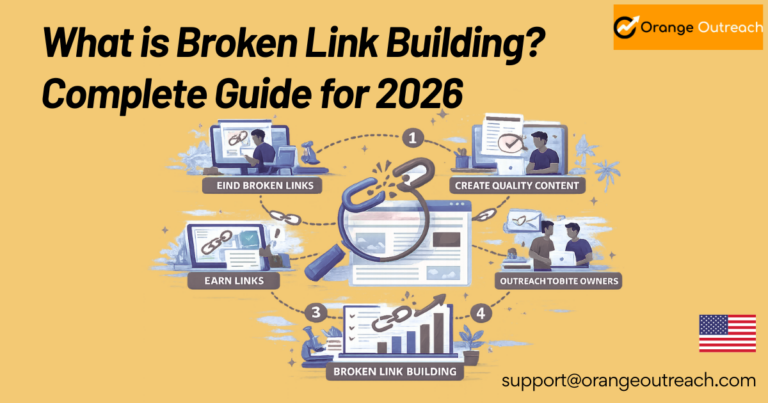
Broken link building is the white hat strategy that involves finding broken links (404 Error) on external websites, Creating relevant Content to replace them and updating the links in Search console to update the broken link with a new link to your content. It offers high value sustainable way to build authoritative links to increase the user experience for the target website.
Key Takeaways:
- Broken links frustrate users and hurt SEO. Fixing them improves user experience, crawlability, and site authority.
- Broken link building is ethical and effective. You earn backlinks by helping site owners fix real problems rather than begging for links.
- Focus on high-value opportunities. Prioritize authoritative, relevant sites with editorial links in content that matches your niche.
- Context matters. Analyze the original broken content to ensure your replacement fits naturally and adds more value.
- Quality content wins. Your replacement should be updated, comprehensive, actionable, and visually appealing. Long-form content (1,500–3,000+ words) performs best.
- Outreach is key. Personalized, concise, helpful emails have much higher response rates than generic link requests.
- Tools make it easier. Use Ahrefs, SEMrush, Screaming Frog, Check My Links, Hunter.io, and outreach platforms like BuzzStream or Pitchbox.
- Broken link building works in every industry. From SaaS and e-commerce to health, education, and finance, the strategy is universal.
- Small sites matter too. Even lower-authority sites can provide relevant traffic and valuable contextual backlinks.
- Patience pays off. Response times may vary, and SEO results typically take 1–3 months, but the links are natural, durable, and long-term.
- Introduction
- What Is a Broken Link?
- Why Do Broken Links found?
- Why Broken Links Are Bad for SEO
- What Is Broken Link Building?
- Why Broken Link Building Matters in 2026
- How Broken Link Building Works
- Step-by-Step Broken Link Building Process
- How to Find High-Quality Broken Link Opportunities
- Best Tools for Broken Link Building in 2026
- How to Choose the Right Agency for Broken Link Building Services
- Why Choose Orange Outreach?
- FAQs
Introduction
Have you ever clicked on a link expecting useful information, only to land on an error page? Frustrating, right?
That’s exactly what a broken link feels like to your visitors, and search engines don’t like it either.
Across the internet, millions of links break every year as websites get updated, pages are removed, and URLs change. And while broken links create a poor user experience, they also open up a powerful opportunity for smart SEO professionals and website owners.
This is where broken link building comes in.
Broken link building is a simple, ethical, and highly effective way to earn quality backlinks by helping website owners fix broken links and offering better content as a replacement. Instead of chasing links, you build them naturally by adding real value.
In this complete 2026 guide, we will explain everything you need to know about broken link building in a clear, step-by-step, beginner-friendly way.
By the end of this guide, you’ll understand:
- What is a broken link and broken link building?
- Why they matter
- How broken link building works
- A simple step-by-step process to earn quality backlinks
- Real outreach tips that get replies
Let’s get started.
What Is a Broken Link?
A broken link is a hyperlink that no longer leads to a working webpage. When users click it, they usually see an error message instead of useful content.
Common broken link errors include:
- 404 Not Found – The page does not exist
- 410 Gone – The page was permanently removed
- 500 Server Error – Server issue
- Redirect loops – Page stuck in endless redirect
- Timeout errors – Page fails to load
Why Do Broken Links found?
Links break for many reasons:
- Webpages are deleted
- Domains expire
- URLs change
- Website redesigns
- CMS migrations
- Poor redirect management
- Hosting problems
Why Broken Links Are Bad for SEO
Broken links negatively affect:
- User experience
- Crawlability
- Page authority
- Website trust
That’s why website owners appreciate being informed about broken links. You are helping them improve their site’s quality.
What Is Broken Link Building?
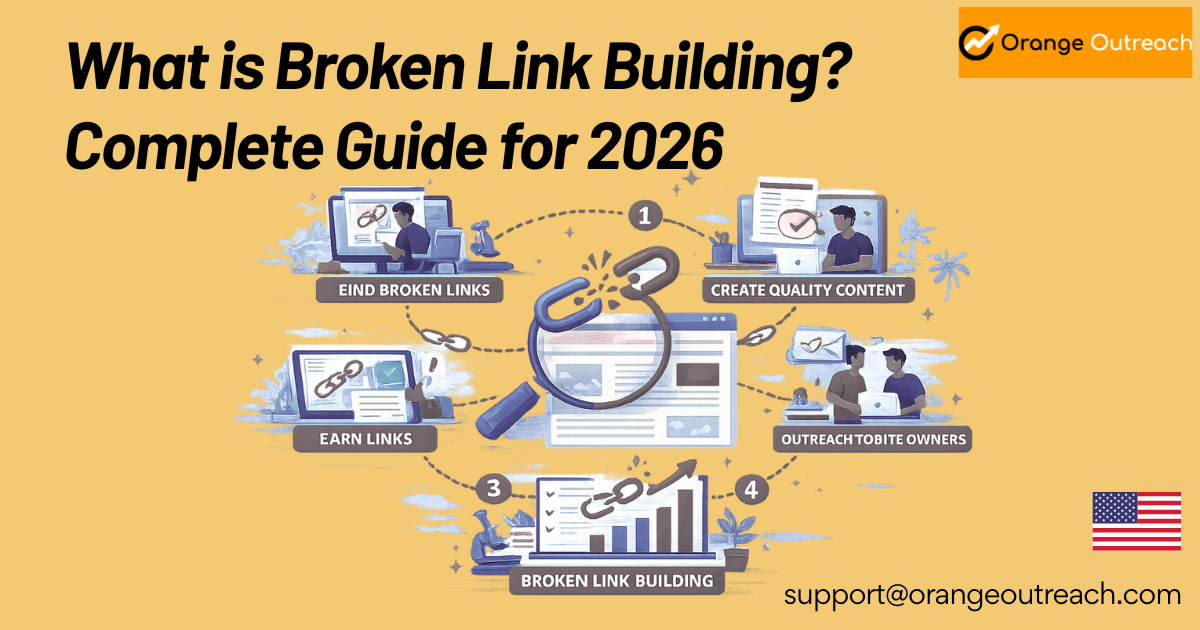
Broken link building is an SEO strategy where you:
- Find broken links on relevant websites
- Create or locate similar high-quality content
- Contact the website owner
- Suggest your content as a replacement
Instead of asking directly for backlinks, you offer a helpful solution, making your outreach natural and ethical.
Simple Example
- You find a marketing blog linking to an outdated SEO guide that returns a 404 error.
- You already have a fresh, detailed SEO guide.
- You email the site owner and inform them about the broken link.
- You suggest your content as a helpful replacement.
The output?
A win-win situation:
- They fix their broken link
- You earn a quality backlink
Why Broken Link Building Matters in 2026
1. Completely White-Hat
Broken link building fully follows Google’s webmaster guidelines. You are not manipulating rankings or buying links.
2. High Success Rate
Since you are helping website owners, your emails are welcomed instead of ignored.
3. Builds Real Relationships
Over time, you can build strong connections with bloggers, journalists, editors, and business owners.
4. Delivers High-Authority Links
You can earn backlinks from authority domains that normally never sell links.
5. Works in Any Industry
Broken link building works in:
- Finance
- Health
- Technology
- Education
- SaaS
- Real estate
- Travel
- E-commerce
How Broken Link Building Works
Broken link building works through a simple workflow:
- Prospecting – Finding relevant websites
- Discovery – Identifying broken links
- Content creation – Preparing replacement content
- Outreach – Contacting site owners
When done consistently, this system becomes a powerful backlink machine.
Step-by-Step Broken Link Building Process
This is the heart of broken link building. If you follow these steps correctly and consistently, you can build high-quality backlinks at scale.
Step 1: Find Relevant Websites
The first step is to find websites that are relevant to your niche and are likely to link out to useful resources. These sites are your potential backlink opportunities.
Focus on websites that:
- Publish high-quality content
- Are related to your industry or topic
- Have real organic traffic
- Regularly link to external resources
Some of the best website types include
- Blogs
- Resource pages
- Educational websites
- Business websites
- Industry magazines
- Authority publishers
- Niche communities
How to Find These Websites Using Google
Google search operators make prospecting much easier and faster.
Use these search queries:
- “keyword” + “resources”
- “keyword” + “recommended tools”
- “keyword” + “useful links”
- “keyword” + “helpful articles”
- “keyword” + “best guides”
- “keyword” + “learning resources”
Example:
If your niche is SEO, search for
- SEO + resources
- SEO + helpful links
- SEO + recommended tools
This helps you find pages that actively link to other websites, increasing your chance of finding broken links.
Pro Tip
Prioritize websites that:
- Have Domain Authority (DA) above 30
- Receive organic traffic
- Are regularly updated
Step 2: Scan for Broken Links
Once you have a list of target websites, the next step is to scan those pages for broken links.
Manually checking links is slow and inefficient. Instead, use professional SEO tools.
Best Tools for Finding Broken Links
- Ahrefs – Excellent for broken backlink analysis and competitor research
- SEMrush – Powerful site audit and backlink tools
- Screaming Frog – Advanced crawling and deep scanning
- Check My Links (Chrome Extension)—Fast on-page broken link detection
These tools crawl web pages and highlight broken outbound links instantly.
How to Use Check My Links
- Install the Chrome extension
- Open a resource page
- Click the extension
- Broken links will be highlighted in red
This method is perfect for beginners and quick prospecting.
What Type of Broken Links Should You Target?
Focus on broken links that:
- We’re linking to informational content.
- Were placed inside relevant paragraphs
- Had editorial context
Avoid broken links in:
- Comment sections
- Footer areas
- Spam directories
Step 3: Analyze Context
Context analysis is what separates average link builders from professionals.
Before reaching out, understand:
- What the original content was about
- Why that specific link was included
- How your content fits naturally in that context
How to Analyze the Original Content
Use tools like Wayback Machine to view what the original broken page looked like.
Check:
- Topic coverage
- Content depth
- Structure
- Intent
Why Context Matters
Website owners only replace links if:
- The new content is relevant.
- The replacement improves user experience.
- The new link adds value.
The better your contextual match, the higher your success rate.
Step 4: Create or Improve Content
Now comes the most important part; your content.
Your replacement content must be significantly better than the original page.
Content Quality Checklist
Your content should be:
- Fully updated for 2026
- In-depth and comprehensive
- Well-structured with headings
- Easy to read and scan
- Rich in actionable insights
- Visually appealing
How to Make Your Content Stand Out
Add:
- Updated statistics
- Real-world examples
- Step-by-step guides
- Screenshots
- Infographics
- Short explainer videos
Content Length & Format
In most cases, long-form content (1,500–3,000+ words) performs best because it:
- Covers topics deeply
- Builds authority
- Improves dwell time
- Increases link acceptance
Step 5: Outreach
Outreach is where you convert opportunities into backlinks.
Your goal is to send a short, polite, personalized, and helpful email.
What Makes Outreach Successful?
- Personalization
- Clarity
- Value-driven messaging
- Respectful tone
What Your Email Should Include
- The exact location of the broken link
- Why it is broken
- How your content helps
- A friendly closing
Outreach Best Practices
- Always use the recipient’s name.
- Mention their website or article
- Keep your email under 120 words.
- Follow up after 5–7 days if no reply
Why Outreach Works So Well
Most site owners appreciate being informed about broken links because:
- It improves user experience.
- It protects their SEO value.
- It enhances content quality.
That’s why broken link outreach has much higher response rates than traditional cold email link requests.
Example Email Template
Subject: Quick heads-up about a broken link in your article
Hi Sarah,
I was reading your article on [Topic] here: [Page URL], really helpful, by the way.
I noticed one of the links in the [Section Name] section seems to be broken and returns a 404 error: [Broken URL]
We recently published a fresh, in-depth guide on ”White Label Link Building Services in USA for SEO Agencies: A Complete Guide 2026”, which could be a helpful replacement if you’re planning to update that section:
Just wanted to share in case it helps. Thanks for the great content!
Best,
Jessica
How to Find High-Quality Broken Link Opportunities
Finding the right broken link opportunities is the key to success in broken link building. The better your prospects, the higher your chances of earning strong and natural backlinks.
Below are the most effective and proven methods to find high-quality broken link opportunities.
1. Competitor Backlink Analysis
One of the easiest ways to find broken link opportunities is by analyzing your competitors’ backlinks.
Many websites link to your competitors’ content. Over time, some of those pages get deleted, moved, or changed, which creates broken backlinks. These broken links are perfect opportunities for you to step in and offer your content as a replacement.
How to Do Competitor Broken Link Research:
- Enter your competitor’s domain into tools like Ahrefs or SEMrush.
- Go to the Broken Backlinks section
- Export the list of broken links
- Create or match relevant content
- Reach out to the websites linking to those broken pages.
This strategy works very well because the website already wanted to link to content like yours.
2. Resource Pages
Resource pages are websites that list helpful tools, articles, and guides for their audience. These pages often contain dozens or even hundreds of external links, making them goldmines for broken link opportunities.
Educational institutions, government websites, and industry organizations frequently maintain large resource lists.
Why Resource Pages Work So Well:
- They link out frequently.
- They are regularly updated.
- They often contain old and broken links.
- They provide high-authority backlinks.
How to Find Resource Pages Using Google:
Use these search operators:
- site:.edu + “resources”
- site:.gov + “helpful links”
- “keyword” + “useful resources”
- “keyword” + “recommended links”
These searches help you find pages that are highly likely to contain broken links.
3. Outdated Content and Old Blog Posts
Older blog posts often contain outdated references, deleted pages, and expired domains. These broken links provide excellent opportunities for link replacement.
How to Find Outdated Content:
- Search for blog posts older than 3–5 years
- Look for industry guides published before major updates.
- Scan old list posts and tutorials
Why Old Content Is Valuable:
- High chance of broken links
- Easy outreach opportunities
- Less competition
- Strong contextual placement
Best Tools for Broken Link Building in 2026
Using the right tools helps you find broken links faster and run your campaigns smoothly.
1. Ahrefs
Ahrefs helps you find broken backlinks from competitor websites and discover high-quality link opportunities.
Best for: SEO professionals and agencies
2. SEMrush
SEMrush is an all-in-one SEO tool that helps you find broken links, analyze competitors, and run site audits.
Best for: Marketers and SEO teams
3. Screaming Frog
Screaming Frog scans full websites and quickly finds broken internal and external links.
Best for: Technical SEO and large websites
4. BuzzStream
BuzzStream helps manage outreach emails, track replies, and organize link-building campaigns.
Best for: Outreach and link-building teams
5. Pitchbox
Pitchbox automates outreach and helps scale large link-building campaigns.
Best for: Agencies and enterprise SEO
6. Hunter.io
Hunter.io finds verified email addresses of website owners for easy outreach.
Best for: Outreach and link builders
7. Check My Links
Check My Links is a free Chrome extension that quickly finds broken links on any page.
Best for: Beginners and bloggers
How to Choose the Right Agency for Broken Link Building Services
If you plan to outsource broken link building, choosing the right agency is critical. A good SEO agency can help you earn high-quality backlinks, while a poor one can harm your site with spammy tactics.
Here is a complete checklist to help you choose the right broken link building agency in 2026.
1. Proven Track Record
Always ask for:
- Case studies
- Real client examples
- Live backlink samples
A trustworthy agency should be able to show real results, not fake screenshots or generic promises.
2. White-Hat Link Building Approach
Make sure the agency strictly follows:
- Google Webmaster Guidelines
- Ethical outreach practices
- Manual link placement
Avoid agencies that:
- Sell links in bulk
- Offer hundreds of backlinks cheaply
- Use PBN networks
- Use automated spam tools
These tactics can destroy your rankings.
3. Transparent Process
A good agency should clearly explain:
- How they find broken links
- How they do outreach
- How they build relationships
- How links are earned
Transparency builds trust and ensures long-term success.
4. Quality Over Quantity
One high-quality backlink from a strong authority site is better than 50 low-quality links.
Look for agencies that prioritize:
- Relevant websites
- Organic traffic
- Strong editorial standards
5. Manual Personalized Outreach
The agency should send:
- Handwritten emails
- Personalized messages
- Context-based outreach
Avoid agencies that use mass automated email blasting.
6. Strong Content Creation Team
Broken link building depends heavily on content quality.
Choose agencies that have:
- Professional writers
- SEO editors
- Content strategists
7. Clear Reporting and Tracking
Your agency should provide:
- Monthly reports
- Live backlink URLs
- Anchor text details
- Traffic metrics
This helps you measure ROI and campaign success.
8. Realistic Guarantees
Avoid agencies promising:
- Guaranteed rankings
- Hundreds of links per month
- Instant results
Instead, choose agencies that:
- Set realistic goals
- Focus on steady growth
- Prioritize quality
9. Industry Experience
Agencies with experience in your niche perform better because they understand:
- Content gaps
- Outreach tone
- Authority websites
10. Ethical Pricing Model
Good agencies charge fairly for:
- Manual outreach
- Content creation
- Relationship building
Extremely cheap pricing often indicates spammy tactics.
Why Choose Orange Outreach?
Orange Outreach makes broken link building easy, effective, and stress-free. We focus on real, high-quality backlinks by helping site owners fix broken links, not by spamming them.
Our team handles research, content creation, and personalized outreach so you get natural links that boost SEO and authority. With proven strategies, transparent reporting, and a white-hat approach, Orange Outreach ensures your campaigns are ethical, efficient, and results-driven.
Ready to grow your backlinks and boost your SEO? Get started with Orange Outreach today!
Frequently Asked Questions (FAQs)
1. What makes broken link building more effective than traditional link building?
You’re actually helping site owners fix a real problem on their website. They appreciate it because broken links hurt their SEO and user experience. It’s a win-win instead of just asking for favors.
2. Do I need expensive SEO tools to start broken link building?
Not at all. There’s a free Chrome extension called Check My Links that works perfectly for beginners. Once you start seeing results and want to scale up, then consider paid tools like Ahrefs.
3. How many broken link opportunities should I pursue at once?
Start with 20-30 quality opportunities. Don’t overwhelm yourself trying to chase hundreds of links. Focus on sites that actually matter in your niche and have good authority.
4. Can broken link building work for new websites with low authority?
Absolutely. Most site owners care more about fixing their broken link than how old your website is. As long as your content is genuinely helpful and relevant, you’ve got a good shot.
5. What quality standards should my replacement content meet?
It should be noticeably better than what was there originally. More detailed, updated with current info, easier to read, with examples and visuals. If it’s just okay, why would they bother switching?
6. How do I find contact information when it’s not obvious on a website?
Start with their contact or about page. If nothing’s there, try Hunter.io to find emails, check the author bio on blog posts, or look them up on LinkedIn. It usually takes a few minutes.
7. Should I create content first or find broken links first?
Either approach works fine. If you’ve got solid content already, find broken links that fit. If you’re targeting specific authority sites, find their broken links first and create exactly what they need.
8. What’s the key to writing outreach emails that get responses?
Keep it short, be genuine, use their name, and don’t sound like a robot. Point out the exact broken link, explain how yours helps, and keep the whole email under a few sentences. No fluff.
9. Is it worth pursuing broken links on lower-authority websites?
Small sites can be totally worth it if they’re relevant and get decent traffic. Sometimes a link from a smaller niche site helps more than a random link from some huge generic website.
10. How long does it take to see SEO results from broken link building?
Most people reply within a week or two if they’re interested. After you get the link placed, expect to wait 1-3 months before you see real SEO improvements. It’s not instant, but it’s reliable.
Also Read: Best Link Building Agencies in USA