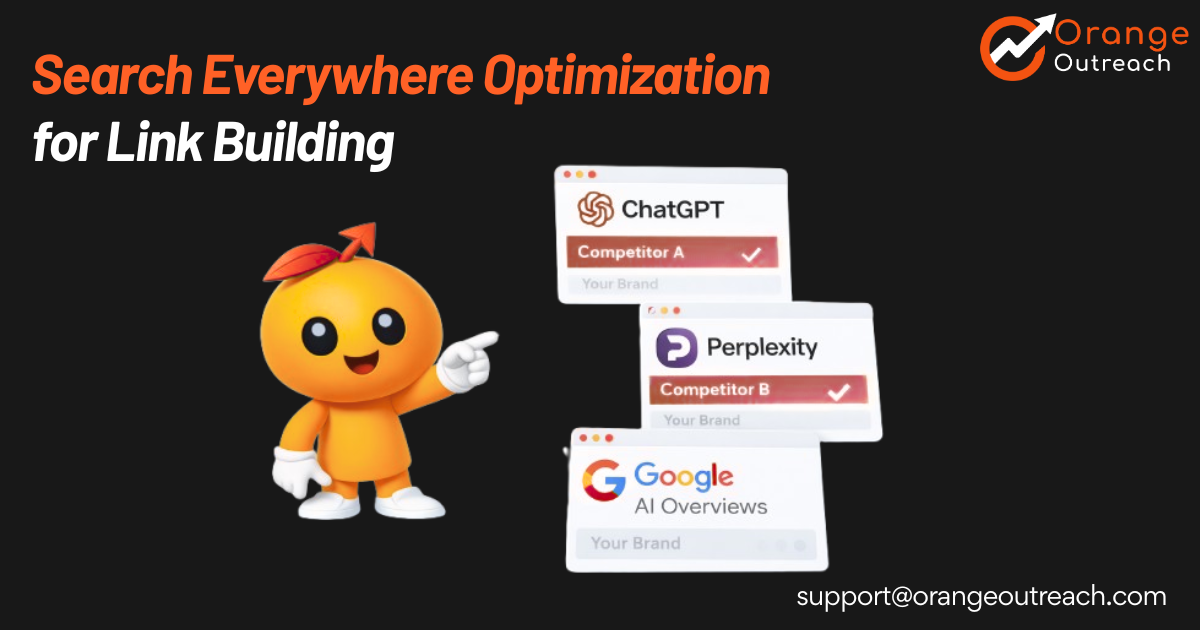
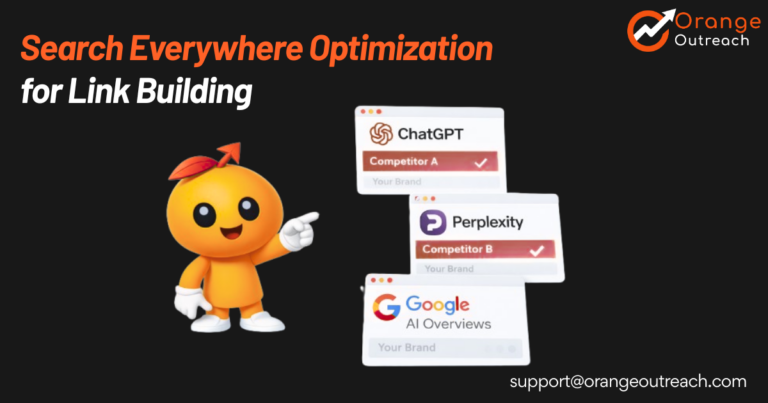
Search Everywhere Optimization (SEO) for link building is an advanced strategy that focuses on expanding your brand’s visibility beyond traditional search engines into AI-driven platforms, content ecosystems, and high-authority digital channels. Instead of relying solely on backlinks, it integrates digital PR, contextual mentions, and multi-platform presence to build authority signals that AI systems recognize. By aligning link-building efforts with evolving search behaviors—including tools like ChatGPT and Google Gemini—this approach ensures sustainable rankings, stronger brand trust, and long-term organic growth.
Key Takeaways
- Search everywhere optimization is about being discoverable beyond Google — across every platform your audience uses to find information.
- SEvO and link building go hand in hand. More platforms mean more surfaces for your brand to be discovered, mentioned, and linked to.
- Every platform has its own search behavior. Optimizing correctly for each one matters more than just showing up.
- Search-first, community-first, and discovery-first platforms each require a different mindset — not just different tactics.
- Age influences where your audience searches. Their intent and psychology determine how they search.
- SEvO doesn’t replace traditional SEO. It builds on top of it and protects your brand when one platform shifts.
- Start with two or three platforms, do them well, and expand from there. Consistency beats presence on every platform done poorly.
Introduction
Let’s imagine that someone wants to find a hidden, underrated Thai restaurant in their city.
How do they find that? They probably just search it up on Google? Yes! That’s only half the story.
There are two scenarios here.
One: This person won’t just stop with the Google search. They’ll go to TikTok, YouTube, or Instagram to search for the same thing.
Then, they head to Reddit or Quora forums to read what actual people have to say. They compare all these options and make a decision.
Two: Someone else may even skip the Google search. They may just surf anywhere else.
This is pretty much the core idea of what search everywhere optimization is.
We just discussed the tip of the iceberg. Stick around. It’s going to get more interesting.
What is Search Everywhere Optimization (SEO)?
We’ve given you a basic idea of what SEO is.
Now that you’ve got the idea, let’s just define what it actually is.
Search Everywhere Optimization is the process of implementing strategies that boost your brand’s online presence beyond just traditional search engines like Google.
Your ideal customer isn’t just finding you on Google anymore.
Understanding where your users are searching for your brand and ensuring you fall into the radar of their online circle is SEO.
For example, young people are more likely to find something they need through YouTube and TikTok.
Your target audience is predominantly Gen Z? Then build your brand presence on YouTube and TikTok and still stick to Google (traditional SEO).
Why Does Search Everywhere Optimization Matter for Link Building?
Link building has always been about getting people to talk about you.
That hasn’t changed.
What has changed is where people talk about you now and where the conversions are happening.
Common examples of search everywhere optimization playing a role in link building are:
A Reddit thread discussing the best project management tool, which mentions yours as the best, can drive more traffic than a guest post on a mid-tier blog.
A YouTube video that ranks for a competitive keyword with high-quality visual content can boost your brand’s visibility more than an average 3000-word article.
A popular TikTok creator mentioning your brand can spark a wave of blog posts and forum mentions (brand mentions) that you never asked for.
There are two ways you’re earning traffic here with search everywhere optimization.
- By appearing in the right places where your target audiences are searching for you, you create a lasting impression on them, increasing the likelihood of converting them.
- The more spaces you occupy, the more chances someone finds your brand worth mentioning or linking.
What “Everywhere” Actually Refers to in Search Everywhere Optimization?
SEO isn’t just one strategy. It’s more like a collection of strategies on different platforms.
Every single one of these platforms has its own search behavior and different kinds of demographics that influence that behavior.
We’ll see a breakdown of search everywhere optimization channels.
Google (Traditional SEO)
Traditional search engines like Google aren’t going anywhere.
Google still dominates the search queries globally.
Your backlinks, content, and technical SEO still matter.
But Google isn’t just enough, especially when your target audience doesn’t prefer it.
Search everywhere optimization just ensures you don’t fall behind when most consumers have changed the way they find information now.
YouTube
YouTube is the second largest search engine in the world after Google.
People search for tutorials, reviews, comparisons, and recommendations on YouTube every day.
If you’re in a niche where people want to see something done, not just read it, you need YouTube content to build brand visibility.
Keep in mind that YouTube content also ranks in Google overviews.
You’re doubling your surface area with just a single piece of high-quality, optimized content on YouTube.
AI Search Engines
Most of the channels in search everywhere optimization are interconnected.
For example, you create a high-quality blog on Google. It ranks and drives high traffic.
Now, the same blog may be cited by AI chatbots like ChatGPT, Perplexity, or Gemini.
These AI chatbots have made it easy for people to find information. People can be specific with their queries and have a follow-up for every piece of information they need.
Google has been surfacing Reddit threads on the first page more than ever in recent years. Reddit is having its moment.
This means Reddit content now has real SEO weight.
Most importantly, people trust Reddit.
People go to Reddit to hear opinions from actual people. They can get honest and genuine opinions there.
If your brand gets mentioned in the right subreddit without spamming mentions, that can send quality traffic your way and earn organic links from people who found you there.
TikTok
If your primary target audience is young people, you cannot ignore TikTok. In fact, it has to be your primary search everywhere optimization channel.
TikTok’s in-app search is growing fast. Gen Z especially uses it to find product recommendations, brand reviews, and how-to content.
You don’t have to go viral on TikTok.
You have to make original, short, search-optimized TikTok content (videos) targeting specific queries of your younger target audience.
That way, you build massive brand awareness over time. You become more findable.
LinkedIn plays a vital role in search everywhere optimization. It has its own ecosystem for B2B brands.
People look for thought leaders, companies, and topics here directly.
Publishing content regularly on LinkedIn builds brand authority.
If you publish search-optimized, quality, long-form articles on LinkedIn, they can show up in Google’s search results.
You can earn mentions and links from LinkedIn in ways most platforms don’t offer.
We cannot skip Instagram when we discuss search everywhere optimization.
Product discovery, influencer recommendations, and brand aesthetics through Instagram Reels can drive real purchase decisions and brand mentions.
Just like TikTok, you can make short content videos on Instagram targeting your audience’s specific queries to build brand authority.
Quora
Quora is a forum platform just like Reddit in search everywhere optimization.
People ask a certain query on Quora and get answers from other people.
A well-written Quora answer or post mentioning your brand can drive traffic for years.
When you mention your brand alongside genuine answers that clarify the original poster’s crisis, you build brand authority through Quora.
This brand authority can earn your brand backlinks.
Podcasts
Podcast listeners are one of the most engaged and loyal audiences in any of the search everywhere optimization channels.
Being a guest on a podcast in your niche can result in your brand name and its URL being mentioned in the show notes, which is a legitimate backlink.
You can reach a portion of the audience who don’t read articles by using podcasts as a search everywhere optimization medium.
Just like Instagram, you can build brand authority on Facebook with regular posts.
Search engines regularly index Facebook pages, posts, and content, ensuring they appear at the top for relevant queries.
Even though Facebook has the oldest demographic among the search everywhere optimization platforms, younger people are more likely to see reviews and community discussions as a way of finding a brand.
Online Marketplaces and E-commerce
A significant portion of people find a brand through online marketplaces and e-commerce sites like Amazon, eBay, Etsy, and the official Walmart and Target websites.
Online marketplaces and e-commerce sites have the most bottom-of-funnel audiences, more than any other search everywhere optimization channels.
If you optimize it right, you can achieve higher conversions here.
Voice Assistants
People use voice assistants like Siri, Alexa, and Google Assistant to clarify their queries.
Most of these queries have more localized intent than the queries on other search everywhere optimization channels, with users needing immediate answers.
Voice assistants pull answers from web content. So, if your brand already has an established web presence on Google, you have a higher chance of being mentioned by a voice assistant.
How To Implement Search Everywhere Optimization for Each Platform
Every platform has its own search logic.
Instead of treating SEO strategies for these platforms as a separate thing for each, think of it like these platforms have shared behaviors.
Platforms that share the same search behaviors also share the same search everywhere optimization principles.
Search-First Platforms – Google, YouTube, AI Search Engines, Voice Assistants
These platforms are built around search intent. People who use these platforms exactly know what they’re looking for.
Your job is to match the user’s search intent perfectly.
Like we already mentioned, the strategies involved in search everywhere optimization are interconnected.
You optimize content in one channel, and it reflects in other channels as well.
If this feels confusing, let’s just break it down with an example in steps.
- You choose the right, high-intent keywords and use them in the title, headings, and content.
- You write original, thoroughly researched content and earn backlinks for it.
- Now, you have yourself a high-ranked blog with consistent traffic.
- Google’s AI snippet feature and AI chatbots like ChatGPT will cite your blog.
- You have a YouTube presence, making consistent high-quality videos matching the user intent.
- With keyword-rich descriptions, titles, and tags in your videos, you attract traffic on YouTube.
- Your search-optimized YouTube video can be cited by AI platforms and Google’s AI snippet.
- Now you have built a comprehensive online presence with a search everywhere optimization ecosystem.
Community-first Platforms – Reddit, Quora, Facebook
In these platforms, you cannot do optimization.
In community-first platforms, you help your audience consistently. This isn’t an overnight strategy like search-first platforms.
In the long run, you reap the benefits here.
Search everywhere optimization is achieved by slowly building relationships with your audience on Reddit, Quora, and Facebook.
- First, create a subreddit and foster a community for your brand on Facebook.
- Interact with users, answer their queries, provide real value, and mention your brand on Quora and Reddit only when it’s relevant.
- How you frame your answers and what kind of threads you choose to engage in matters a lot. The search everywhere optimization here happens quietly.
- At one point, the users in these communities recognize you, and you gain their trust.
Trust is the primary algorithm on these platforms.
Discovery-first Platforms – TikTok, Instagram, LinkedIn, Podcasts, Online Marketplaces, and e-commerce sites
People on these platforms aren’t searching for you with intent.
Your content is the thing that stops people from scrolling.
However, it can get tricky.
This sounds like most of your audience on these platforms will be top-of-funnel, but middle- and bottom-of-funnel users can use these platforms for a query too.
Depending on your niche, you can build awareness on TikTok and Instagram or just end up in your target users’ algorithms.
You have to use the right keywords, hashtags, and content that answer the user’s queries to fulfill the search everywhere optimization strategies on TikTok and Instagram.
- On your LinkedIn posts, the opening line matters, as it can determine whether readers click “see more.”
- For podcasts, optimize your show episode title and show notes with keywords since Google indexes them.
- On marketplaces like Amazon and Etsy, your title and product description carry the same weight as on-page SEO. So, treat them that way.
Is Search Behavior on Social Platforms Determined by Age?
Partially yes. But search everywhere optimization is more nuanced than that.
We’ve already established the fact that younger people have shifted to certain social platforms more than others.
Age influences where people search. Behavior influences how they search.
A 45-year-old marketer on LinkedIn searches differently than a 45-year-old parent on Facebook, even though they’re the same age.
A Gen Z TikTok creator may not search the same way a Gen Z student on Reddit does.
That being said, demographics still matter when we talk about search everywhere optimization.
If your brand caters to a younger audience, TikTok, YouTube, and Instagram are non-negotiable.
If you’re targeting professionals in your relevant niche, LinkedIn should be one of your top priorities, catering to anyone regardless of age.
Online marketplaces and Google are still your best bets when you’re going after bottom-of-funnel customers.
You can think about this beyond the age consideration. Don’t just ask where your target audience is.
- Are they searching with an intent?
- Are they browsing for discovery?
- Are they looking for community validation?
When you understand the psychology and intentions of your target consumer, you’ll know the right platform where your brand can build presence to connect with them.
Final Thoughts
Search everywhere optimization isn’t a trend.
It’s a progressive response to how people find information now.
Google is still the foundation. But your audience lives across dozens of other platforms, with its own search logic, culture, and behavior.
Showing up on the right platforms and showing up correctly is what separates the brands that get discovered from the brands that go under the radar of their audience.
For link building, search everywhere optimization widens every funnel.
The more channels you focus on, the more chances you have of your brand being discovered, mentioned, and linked to.
Start with two or three platforms. Do it right. Then expand.
At Orange Outreach, we help brands build their presence across the right platforms — from search-optimized content to strategic link building that goes beyond Google.
If you’re ready to show up everywhere your audience is looking, schedule a meeting with us to explore your options.
Frequently Asked Questions
- Is Search Everywhere Optimization Another Word for Omnichannel Marketing?
Not exactly. Omnichannel marketing is about delivering a seamless customer experience across channels. SEO is specifically about being discoverable across different search ecosystems. The overlap is real, but the focus is different. SEO is search first, not just presence first.
- Does Search Everywhere Optimization Replace Traditional SEO?
No. Google is still a dominant search platform, and traditional SEO still drives significant results. SEO is an expansion of your strategy, not a replacement.
- How Long Does Search Everywhere Optimization Take to Show Results?
Like most SEO strategies, it’s a long game. YouTube videos compound over time. Reddit mentions can drive traffic for months. LinkedIn authority builds slowly. Expect to be consistent for at least six months before drawing real conclusions.
- Can Small Brands Implement Search Everywhere Optimization?
Absolutely. You don’t need a big team. Pick one or two platforms, show up consistently, and focus on being genuinely useful in your niche. Small brands can build serious authority this way before their larger competitors even notice the platform.
- What’s the Single Most Important Platform for SEO in 2026?
YouTube. It’s the only platform that combines search behavior, long-form authority content, Google integration, and backlink potential all in one place. If you’re only going to add one channel to your strategy this year, make it YouTube.
Also read: Link Building Solutions for SEO Agencies