Key Takeaways
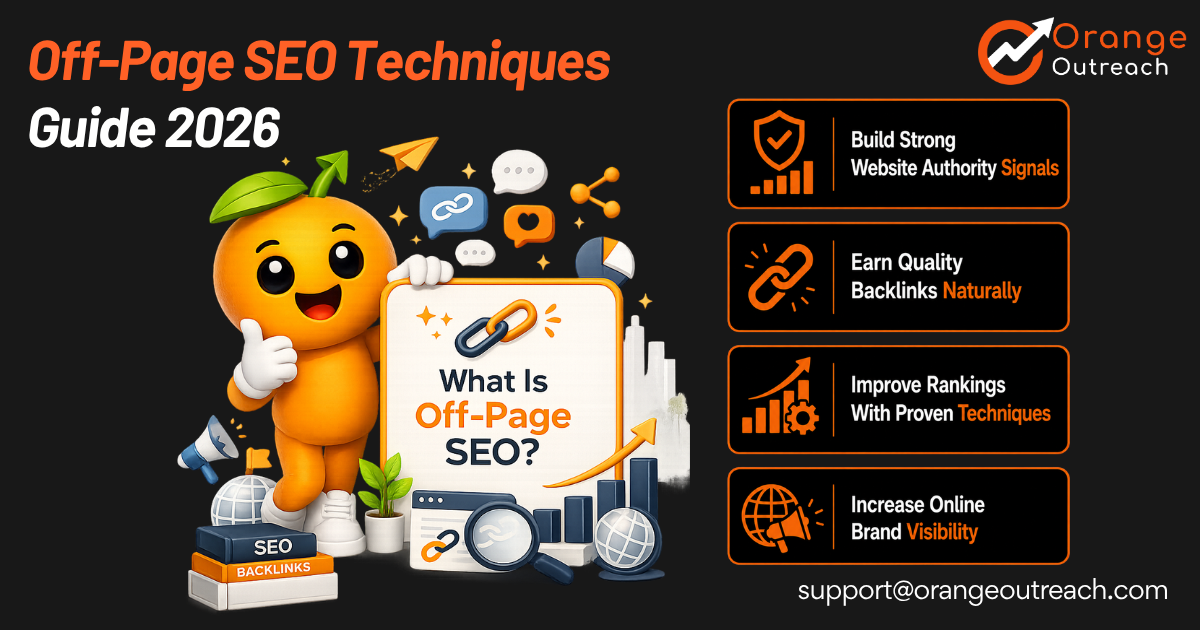
- Search engines pay keen attention to how your brand is talked about outside your website.
- Strong Off Page SEO techniques help earn that trust naturally over time.
- A few links or mentions from relevant, reliable websites carry far more value than many random ones.
- Which is why smart Off Page SEO strategies avoid shortcuts.
- Steady actions using proven Off Page SEO techniques slowly build authority that search engines trust.
- The right Off Page SEO strategies improves visibility, credibility, and user confidence at the same time.
Introduction
Search engines do not rank websites based only on what is written on their pages. DOT!
If you’ve spent any time learning SEO, you’ve probably heard one thing again and again: content, quality, and all the on-page stuff are very important. Well, that’s true. But all these alone do not decide rankings anymore.
What happens outside your website now plays a very important role in how search engines judge your credibility. Well, that’s because Google algorithms’ main focus is on providing people with the right search results.
It wants to show people the most useful, reliable, and trustworthy search results for every question they ask. To do this, Google cannot depend only on what a website says about itself. This is why, now in this highly competitive digital space, getting yourself familiar with Google algorithm-approved Off Page SEO techniques is very important.
→ Off Page SEO helps Google understand how much a website is trusted by others across the internet.
Studies across the SEO industry show that pages ranking on Google’s first page usually have strong Off Page SEO authority. But, just hold a sec; do not just randomly rush things. Because Off Page SEO is a bit tricky; if done right, it will help you upgrade; if not, things can get off.
Think of it this way.
Your website is your voice. Off Page SEO is what others say about you when you are out. But keep in mind not all can speak of you. It demands pure-quality sites to speak of you.
In this guide, we’ll break down Off Page SEO. You’ll understand what it actually means, why it is important, how it connects with trust and E-E-A-T, and which Off Page SEO techniques genuinely help rankings today.
If you’ve ever wondered why some sites rank easily while others keep trying without results, this article will clear that up.

What Is Off Page SEO?
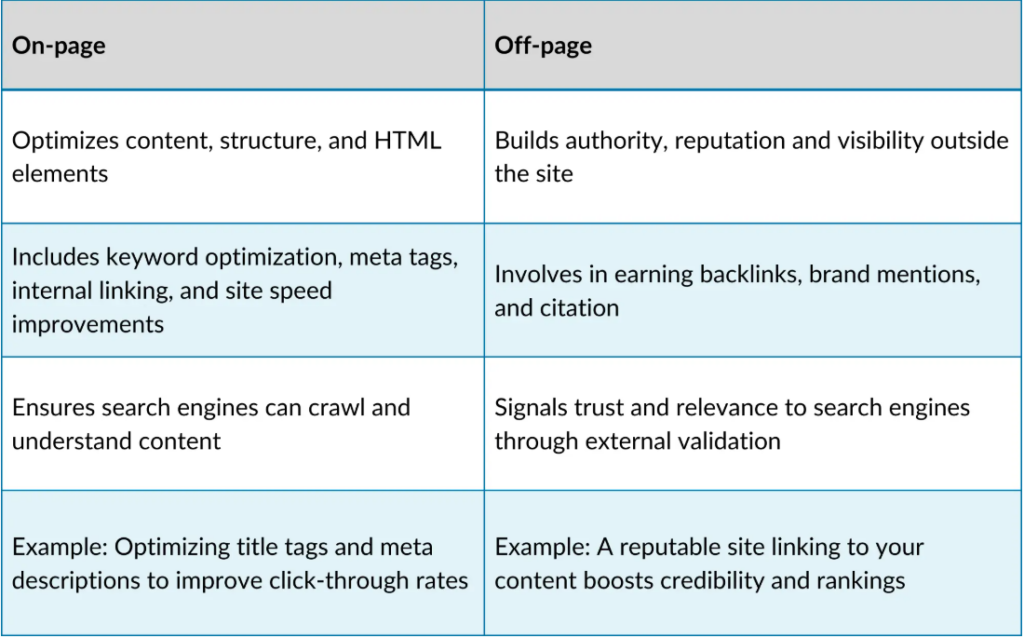
Off Page SEO includes everything that happens outside your website that helps search engines decide whether your site deserves to rank higher.
→ On-Page SEO is about
how well your website explains itself.
→ Off Page SEO is about
how the internet responds to it.
You’ve probably noticed this: not all well-written and quality on-page websites rank higher. That is because each engine doesn’t just rely only on what you publish on your own pages. Anyone can claim to be helpful, trustworthy, or the best in their niche. Considering all the factors and like a strong confirmation from Google’s end, Google looks for outside confirmation. That is how strong the Off Page SEO is for your website.
And that confirmation comes from things like
- Other websites linking to your content
- Trusted and reliable platforms mentioning your brand
- Customers leaving real reviews
- Online discussions that reference your business
All these signals help search engines answer one core question:
Can this website be trusted by users?
→ Off Page SEO techniques work like digital word-of-mouth.
Let’s put this into a real-life example.
Just consider you are searching for a local service (your call). You find two websites:
- One has no reviews, no mentions anywhere else, and no references.
- The other is talked about on blogs, listed on directories, and has a decent number of real reviews.
Even before clicking, you instinctively trust the second one more. Yes, that’s how a trust is created in the digital space. And this is the base of everything in digital marketing—human intent has changed.
Search engines think the same way. (These are meant to provide the best result and serve the human, so obviously they trust the most mentioned, most reviewed, and most backed up in the top ranks. are designed to build this trust gradually; yes, it takes quality time to build the trust; it’s not an overnight thing.
The best Off Page SEO techniques must focus on:
- Building meaningful links from relevant sites
- Earning mentions from industry sources
- Showing consistent brand presence across the web
- Encouraging genuine customer feedback
This is why Off Page SEO plays a major role in long-term rankings. A well-optimized page may look perfect, but without external trust, it often struggles to move up in search results.
→ Off Page SEO is about earning credibility over time. (For that you need the right Off Page SEO strategies and Off Page SEO techniques
When the right people talk about your website in the right places, search engines listen.
How Google’s Algorithm Looks at Off Page SEO
Google’s main goal has always stayed the same from the start: to show people
- The most useful
- Reliable
- Trustworthy results for every search.
To do this, Google cannot depend only on what a website says about itself. That would be risky. So over time, Google’s algorithm evolved to look at external validation.
→ Google looks at three broad things when it comes to Off Page SEO.
1. Authority signals
Google checks whether your website is being referenced by other authoritative websites. If respected sites link to you, it signals that your content or brand is worth attention and checks for the quality.
2. Trust signals
Google also looks for signs that real people trust your business, remember not some pushed ones. A website that is talked about naturally across the web feels safer to rank. And that’s what Google is searching for.
3. Relevance signals
This is a tricky part because not all links or mentions carry the same weight. So, that’s where Google evaluates whether the sites mentioning you are related to your industry or topic.
When these three signals work together, Google gains confidence in your website. And confidence is what helps rankings move.
And keep in mind, both on-page and off-page should be solid to withstand and be seen in this generative AI-dominated era. Industry studies consistently show that pages ranking on Google’s first page and AI snippets usually have strong off-page authority backing them up. But this is where many people go wrong.
Off Page SEO is powerful, but it is also sensitive.
→ Done right, it helps your site grow steadily.
Done wrong, it can slow things down or even harm visibility.
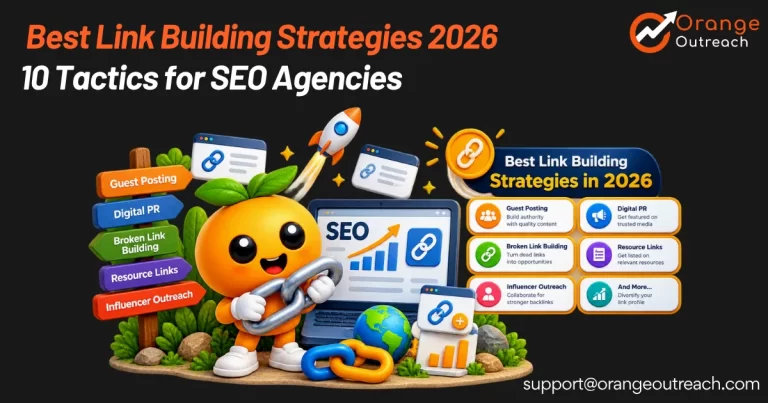
Check this out: Orange Outreach is a specialized SEO link-building and guest-posting agency working on the core of Google-approved Off Page SEO strategies for our clients across various niches.
14 Proven Off Page SEO Techniques to Boost Rankings
1. Backlinks
Backlinks are the foundation of all Off Page SEO.
Search engines value links because links are like recommendations. When another website links to your page, it’s basically saying, “This page is really useful and high in quality.”
To earn these links naturally, your on-page content must be up to the mark:
- Write content that answers real questions.
- Explain things clearly
- Share examples people can relate to
- Offer something better than what already exists
Basically,
→
Link building is the process.
→
Backlinks are the action of the process.
- Link building is the effort you put in.
- Backlinks are the actual links pointing to your website.
For example, if you publish a clear guide that explains a confusing topic in simple words, other writers may link to it while explaining the same topic on their own websites. This is one highly recommended Off Page SEO strategy many follow. This really works best because it grows over time. One good piece of content can keep earning links for years.
2. Guest posting
Guest posting means writing an article for another website in your industry (reliable ones).
The goal is not just to get a link. The real goal is
- Reach the right audience
- Build a long-term trust
- Show your knowledge
A good guest post:
- Matches the website’s topic
- Provides real value to readers
- Includes a natural link back to your site
For example, if you run a marketing website, writing for a business or start-up blog makes sense. Writing for a random website does not. Keep in mind: this is one of the most reliable Off Page SEO strategies when done thoughtfully. Several
best guest post services providers in the United States execute this flawlessly.
3. Outreach
Many people think links come from emails alone. In reality, most strong links come from relationships.
When you:
- Engage with people in your industry
- Comment thoughtfully on their content
- Share useful feedback
- Collaborate on ideas
Links happen naturally.
Over time, people start mentioning your work, referencing your articles, and linking to your site without you asking.
This Off Page SEO approach feels slow at first, but it’s powerful and safe.
4. Getting listed in trusted business directories
Not all directories are bad. The problem is low-quality ones.
By getting listed under directories, it helps because they:
- Confirm your business exists
- Improve online visibility
- Support brand credibility
Examples include:
- Google Business Profile
- Industry-specific directories
- Local business listings
Always trust a reliable one. This Off Page SEO technique is especially helpful for new websites and local businesses because it builds a basic trust layer. It makes the algorithm register your presence.
5. Customer reviews
Nowadays, people
trust online reviews more than a mere word of mouth. So, genuine reviews always help build the trust and make yours a reliable one. Actually, reviews are the real boosters in this AI-driven world, because they’ve given the user a confirmation.
Search engines look at reviews to understand:
- User experience
- Brand reputation
- Customer satisfaction
But remember, you don’t need perfect and polished reviews. You need real ones.
How?
Encourage customers to leave feedback on:
- Google
- Industry platforms
- Relevant review websites
This is one of the best from the list of Off Page SEO strategies that helps both rankings and conversions because people trust businesses with real reviews.

6. Brand mentions
In most cases reputable websites talk about your brand but don’t actually link to you. No need to worry about this because these mentions still help Off Page SEO because they still:
- Increase brand awareness
- Show authority signals
You can improve this by:
- Tracking mentions
- Politely asking for a link when it makes sense
Therefore, even without links, consistent brand mentions tell search engines your name is being discussed across the web, contributing to entity authority and
E-E-A-T (Experience, Expertise, Authoritativeness, Trustworthiness).
7. Digital PR
Digital PR is nothing but the same traditional PR, but here the focus is on digital space. If you are planning to do digital PR, focus on getting mentioned in articles, blogs, and publications.
Digital PR actually works when you:
- Share original insights
- Comment on industry trends regularly
- Offer expert opinions in the right manner
Journalists and bloggers look for useful perspectives, not just mere promotions. So, when done right, this Off Page SEO technique earns strong links from trusted websites that search engines respect.
8. Social media sharing
Social media links may not directly boost rankings, but they support Off Page SEO indirectly, because some top social media platforms have high domain authority sites, which helps
increase visibility.
- Content reaches more people
- More people discover your site
- Some of them link to it later.
Basically social media acts as a distribution channel. More visibility in your content = the higher the chances of earning links naturally. And your social profiles have high chances of ranking in search engine results pages (SERPs).
9. Influencer marketing
Influencers don’t have to be celebrities.
A good influencer:
- Has a relevant audience
- Shares useful content
- Is trusted within a niche
Collaboration can include:
- Mentions
- Co-created content
- Interviews
These mentions strengthen Off Page SEO because they combine reach, trust, and relevance.
10. Content marketing
People link to facts; that’s how the world runs, right?
When you publish:
- Surveys
- Case results
- Observations from experience
Other websites reference your data when explaining similar topics. But for that you need strong on-page and Off Page SEO. This Off Page SEO technique works well because original information is hard to replace.
11. Reclaim broken or lost links
Sometimes links disappear because:
- Pages get removed.
- URLs change
- Websites update content
You can:
- Find broken links pointing to your site
- Fix the page
- Ask for the link to be restored
This is a clean and effective Off Page SEO strategy because the link already existed once. Consider Orange Outreach; we are specialized and experienced in helping companies figure out broken links and help them resolve them and also with other Off Page SEO services too.
12. Forum posting
Forums, groups, and Q&A platforms help when used honestly.
→ Answer questions.
Share experiences.
Help without pushing links.
That’s how it works; do not try to bombard here, be mindful of the content you are posting, and have this regularly.
Over time:
- People recognize your expertise.
- Your brand gains visibility.
- Links come naturally
Posting your thoughts from your company end builds trust naturally, which is the heart of Off Page SEO.
13. Strengthen local SEO mentions.
For businesses serving specific areas, local mentions are very important—a must, if you ask us.
Local SEO mentions include:
- Local blogs
- News sites
- Community pages
Consistent local references help search engines understand where your business belongs geographically.
14. Stay Consistent
Off Page SEO is not a one-time task.
Search engines trust websites that:
- Get mentioned regularly
- Earn links steadily
- Stay visible over time
Small, consistent actions beat sudden spikes. This consistency is what turns Off Page SEO techniques into long-term results. Off Page SEO, even if links look good. Search engines observe user sentiment. At
Orange Outreach, we focus on doing this the right way by working on the base of all the above-mentioned Off Page SEO techniques, building visibility, trust, and authority that actually lasts.

FAQs
- Are Off Page SEO techniques still important after Google’s AI updates?
Yes, they are. In fact, they are very important now. Google has become sharper after the AI boom. It does not just read your website anymore; it looks around to see how the internet reacts to you. That is why Off Page SEO techniques are still very much alive.
- What is the real difference between backlinks and brand mentions?
Backlinks are direct links pointing to your website. Brand mentions are when people talk about your brand name without linking it. When your brand keeps appearing on good platforms, forums, reviews, or articles, Google notices that pattern. Modern Off Page SEO techniques focus on both.
- Does social media actually help with Off Page SEO?
Social media does not push rankings directly, but it plays a role. When your content is shared, saved, or discussed, it travels. That visibility often leads to real links, brand searches, and mentions later.
- Why are reviews considered an Off Page SEO factor?
Because reviews show real people are using and trusting your brand. Google cares about that a lot. When users leave honest reviews on platforms like Google, business sites, or industry pages, it sends a strong trust signal. Among all Off Page SEO techniques, reviews are one of the clearest signs that a business is genuine and active.
Also Read:
Best Link Building Agencies in Los Angeles
{
"@context": "https://schema.org",
"@type": "FAQPage",
"mainEntity": [{
"@type": "Question",
"name": "Are Off Page SEO techniques still important after Google’s AI updates?",
"acceptedAnswer": {
"@type": "Answer",
"text": "Yes, they are. In fact, they are very important now. Google has become sharper after the AI boom. It does not just read your website anymore; it looks around to see how the internet reacts to you. That is why Off Page SEO techniques are still very much alive."
}
},{
"@type": "Question",
"name": "What is the real difference between backlinks and brand mentions?",
"acceptedAnswer": {
"@type": "Answer",
"text": "Backlinks are direct links pointing to your website. Brand mentions are when people talk about your brand name without linking it. When your brand keeps appearing on good platforms, forums, reviews, or articles, Google notices that pattern. Modern Off Page SEO techniques focus on both."
}
},{
"@type": "Question",
"name": "Does social media actually help with Off Page SEO?",
"acceptedAnswer": {
"@type": "Answer",
"text": "Social media does not push rankings directly, but it plays a role. When your content is shared, saved, or discussed, it travels. That visibility often leads to real links, brand searches, and mentions later."
}
},{
"@type": "Question",
"name": "Why are reviews considered an Off Page SEO factor?",
"acceptedAnswer": {
"@type": "Answer",
"text": "Because reviews show real people are using and trusting your brand. Google cares about that a lot. When users leave honest reviews on platforms like Google, business sites, or industry pages, it sends a strong trust signal. Among all Off Page SEO techniques, reviews are one of the clearest signs that a business is genuine and active."
}
}]
}